Visualizzazione post con etichetta engineering structures. Mostra tutti i post

martedì 19 dicembre 2017

Malerba


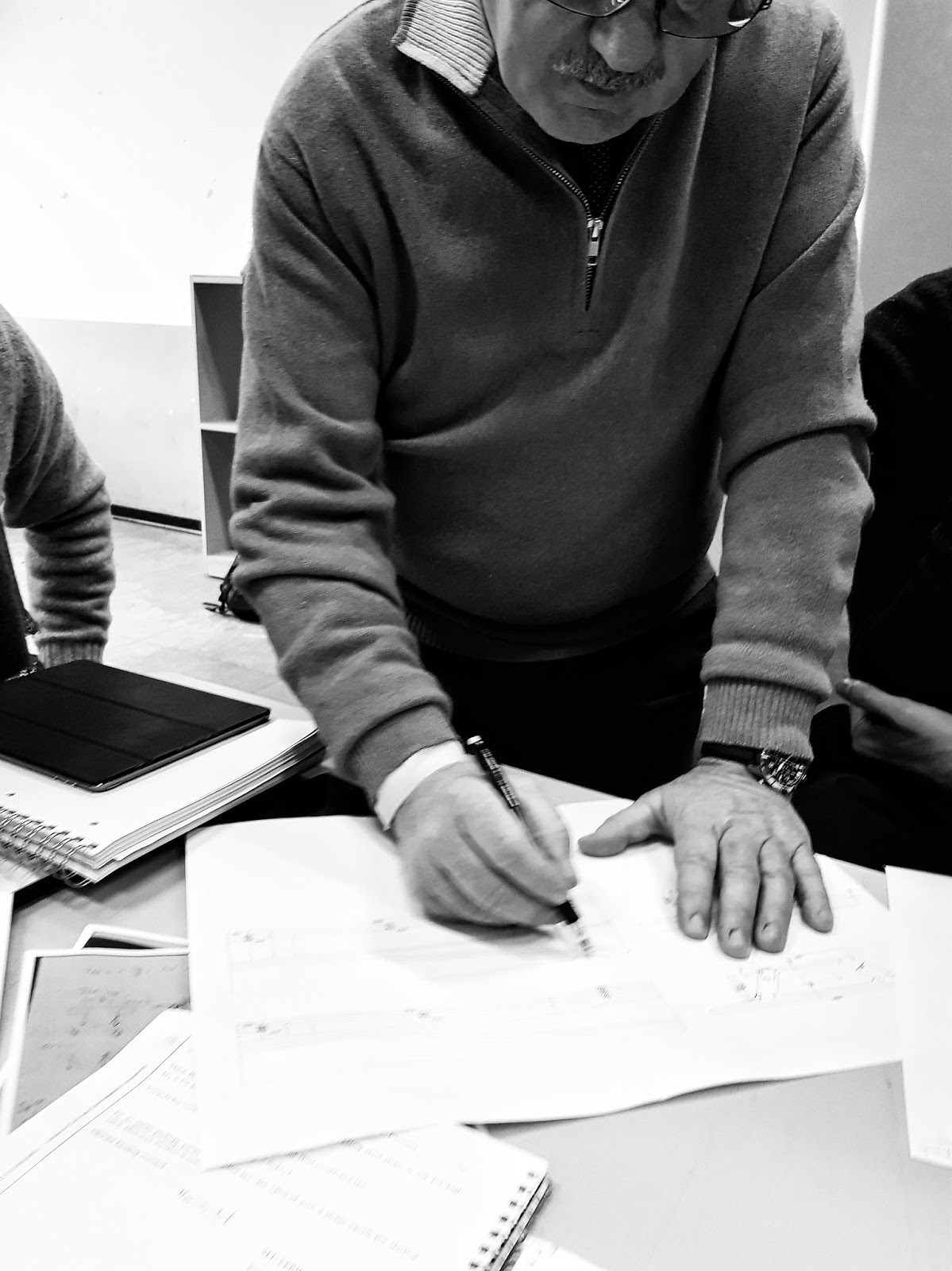
Since the past 4 months I have the privilege to collaborate at the Politecnico di Milano with Prof. Pier Giorgio Malerba, serving as teaching assistant for the course of Bridge Theory and Design. The course, taken by second year Master of Science students in Civil and Transportation Engineer, is one of the few that require as partial fulfillment a compulsory final project.
The project focuses on the structural design of a prestressed concrete box girder bridge and I assisted 5 teams of 7-8 students over the entire Fall Semester. My teams did an excellent job: we finished the last revision yesterday and I am looking forward to them delivering the projects and taking the final exam in January and February.
For me it was an exciting experience which fits perfectly with my current job as a Programme Officer in the European Commission and specifically in the Sustainable Transport Unit of the Joint Research Centre.  


martedì 15 agosto 2017

post DCEE 2016 - pre DCEE 2017

Last October in Rome, together with Franco Bontempi, I organised the 5th Design in Civil and Environmental Engineering workshop (DCEE 2016). But time flies.
In view of the DCEE 2017 workshop that this year will take place in Cagliari Sardinia on November 9-11, we uploaded the DCEE 2016 papers in the workshop website, together with a brief editorial.
We are looking forward to a successful DCEE 2017 workshop!


martedì 28 ottobre 2014

antifragility (the next thing?)

What if cities, urban developments and structures could not only recover, but also grow stronger after adverse events (floods, earthquakes, terrorist attacks?).

What if they gained instead of suffering from everyday disorder?

Is over optimization, otherwise efficient for normal design purposes, a pitfall in our ever-changing society?

Is seeking the utmost efficiency an utopia?

Are we lacking redundancies?

How technology and modern design and construction methods can facilitate the above?

Can "antifragile design" by architects, engineers and urban planners, enhance a design for urban/disaster resilience?

Starting from Nicolas Taleb’s interesting book “Antifragile: Things That Gain from Disorder” I recently read (again), these are only some of the questions that came into my mind when I prepared two lessons for a safety-engineering course on risk analysis and robustness.

Is antifragility the next thing? Judging from web references and conference announcements this year, this certainly seems to be the case...

word cloud


Fragile VS Resilient VS Antifragile


See also:
Taleb, Nassim Nicholas (November 2012). Antifragile: Things That Gain from Disorder(1st ed.). London: Penguin. p. 519. ISBN 1-400-06782-0. 

domenica 6 luglio 2014

Fragility analysis for the Performance-Based Design of cladding wall panels subjected to blast load

A paper on the fragility analysis of cladding wall panels subjected to blast load was published (available online) in Engineering Structures.

The paper was prepared by Pierluigi and Francesco and my involvement was as a third author.
I had the opportunity to present preliminary results from this research at the ICOSSAR conference in New York last year.

Francesco is involved as a guest editor of Engineering Structures for a special issue from a mini symposium he organized at the same conference with Michele Barbato of Luisiana State University and Alessandro Palmeri of Loughborough University .

Uncertain parameters of vehicle borne improvised explosive device scenarios
Olmati P, Petrini F, Gkoumas K. Fragility analysis for the Performance-Based Design of cladding wall panels subjected to blast load. Engineering Structures (2014); DOI: 10.1016/j.engstruct.2014.06.004
http://www.sciencedirect.com/science/article/pii/S0141029614003605